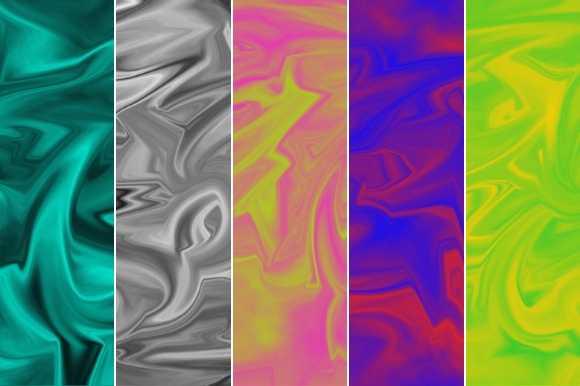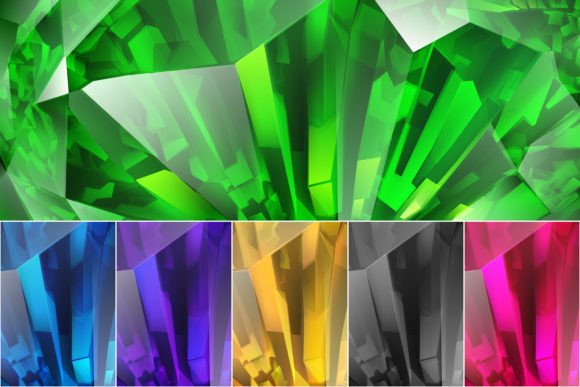
Colorful Mosaic Abstract Backgrounds for Designers
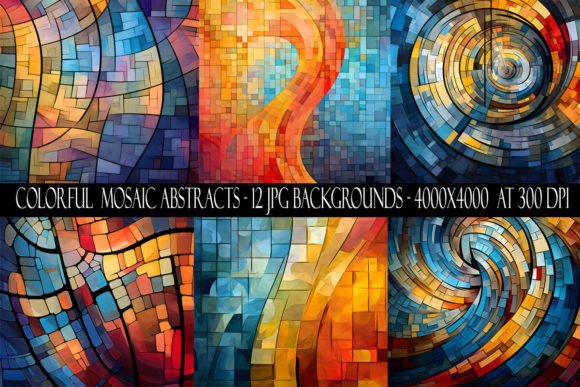
There is a distinct energy that comes from breaking things apart and putting them back together in a new order. In design, we often look for textures and foundations that can ground our work without overwhelming it. However, sometimes the background needs to be the hero. This is exactly where Colorful Mosaic Abstract Backgrounds step in. They offer a complex, fragmented aesthetic that suggests order within chaos. These aren't just random splashes of paint; they are constructed patterns that mimic the depth of stained glass or shattered gemstones. For the creative professional, this collection provides a robust visual anchor that demands attention while still allowing your typography and foreground elements to shine.
The Visual DNA of a Mosaic Aesthetic
When we talk about a mosaic style, we are discussing a specific visual language. It is characterized by the assembly of small, distinct units—tesserae—into a larger image. In the digital realm, particularly with this collection, the appeal lies in the texture and the color interplay. Unlike a flat gradient or a standard stock photo, a mosaic background offers a "tooth" to the design. It creates a sense of movement and rhythm. The eyes naturally want to trace the lines between the color blocks.
This particular pack of Colorful Mosaic Abstract Backgrounds is curated to balance vibrancy with utility. Because the designs are abstract rather than literal representations of a specific object (like a photo of a building), they possess a versatile personality. They can feel playful and modern in one context, or sophisticated and luxurious in another, depending on the color palette you extract from them. For the designer or brand strategist, this versatility is gold. You aren't buying a one-trick pony; you are acquiring a design asset that can adapt to seasonal campaigns or evolving brand guidelines.
Strategic Applications for Branding and Marketing
As someone who has worked in brand strategy and publishing, I know that the background is often the unsung hero of a layout. It sets the mood before a single word is read. Using these abstract backgrounds effectively requires understanding their strengths in different environments.
Editorial and Publishing Design
In editorial design, whitespace is a luxury, but texture is a necessity. For magazine covers, e-book chapter dividers, or album artwork, these backgrounds provide an immediate sense of professionalism. Imagine a book cover for a mystery novel or a contemporary poetry collection. A fragmented, colorful mosaic can symbolize the complexity of the human psyche or the breaking of norms. Because these files are provided at 4000 x 4000 pixels at 300 dpi, they are print-ready. You can bleed them off the edge of a standard print layout without worrying about pixelation or artifacts. This high resolution ensures that the fine details of the mosaic remain crisp, which is essential for print on demand services where paper quality can sometimes soften imagery.
Digital Presence and Social Media
On screens, Colorful Mosaic Abstract Backgrounds perform exceptionally well due to their high contrast and saturation. In the fast-scrolling environment of Instagram or TikTok, a textured background stops the thumb. For a web designer, these can serve as hero sections for landing pages, provided the text overlay is handled with care. For social media graphics, they are perfect for quote cards or announcement posts where you want to convey energy and creativity. They work particularly well for industries like music production, streetwear fashion, event management, or creative agencies. The visual noise of the mosaic suggests innovation and "breaking the mold"—a subtle psychological cue that aligns well with brands that pride themselves on thinking differently.
Technical Specifications and Workflow Integration
One of the most frustrating aspects of working with design assets is technical friction. A beautiful image that is too small or formatted incorrectly slows down production. This collection addresses those pain points directly. The files are delivered in JPG format within a Zip file, which is universally compatible with software ranging from Adobe Photoshop and Illustrator to Canva and Procreate.
The decision to provide these as non-seamless formats is an important distinction. Seamless patterns are designed to tile infinitely without visible edges. While useful for wrapping paper, they can sometimes look repetitive and artificial in high-end design. A non-seamless background is a complete composition. It has a focal point and a natural fade or edge. This makes it superior for single-use applications like posters, hero images, or print covers. You treat it like a photograph, placing your focal point in the areas of the image that best support your layout.
Handling the Abstract Elements
When working with Colorful Mosaic Abstract Backgrounds, readability is your primary challenge. The complexity of the pattern can clash with intricate typefaces. My recommendation is to lean into contrast. If the background is busy, your typography should be clean. A bold, geometric sans serif font often works best here because the clean lines of the letters contrast with the jagged, organic nature of the mosaic tiles. Alternatively, if you are going for a maximalist look, a heavy serif font with a drop shadow or a knockout effect (where the text is cut out of a solid shape) can create a striking vintage-modern hybrid.
Licensing and Commercial Viability
For the entrepreneur and small business owner, the utility of a design asset is tied to its licensing. It is not enough for a background to look good; it must be legally safe to use. This collection comes with commercial and print-on-demand licensing. This is a critical feature for anyone selling products.
If you are designing merchandise—t-shirts, mugs, phone cases, or posters—you need to ensure your assets are cleared for resale. The licensing included here covers that specific need. Furthermore, the removal of the watermark upon download ensures that your final product looks professional. There is nothing more jarring than a watermark appearing in the texture of a finished design. By providing clean files, the collection allows you to integrate these backgrounds seamlessly into your product line or client deliverables.
Practical Tips for Choosing and Testing
Not every project suits a mosaic background, and not every mosaic suits every brand. Here is a practical checklist for evaluating if these abstract papers fit your current project:
- Brand Alignment: Does your brand identity rely on structure and minimalism? If so, a chaotic mosaic might conflict with your message. However, if your brand values creativity, diversity, or energy, the mosaic aligns perfectly.
- Color Extraction: Look at the specific colors present in the JPG. Can you use an eyedropper tool to pull a complementary color for your text? Using a color directly from the background creates a cohesive, harmonious design.
- Layering Techniques: Don't just slap text on top. Try placing a semi-transparent color block over a portion of the background to create a "safe zone" for your headline. Alternatively, use blending modes like "Multiply" or "Screen" to interact with the texture in interesting ways.
- Scale and Crop: Because the resolution is high (4000x4000), you have room to crop. Don't feel constrained by the whole image. Zooming in on a specific section of the mosaic can change the mood entirely—from a wide, chaotic pattern to a tight, geometric texture.
Elevating Your Creative Toolkit
In the crowded world of digital content, standing out requires a unique visual voice. Relying on the same stock photography as everyone else leads to generic branding. Colorful Mosaic Abstract Backgrounds offer a way to inject personality and depth into your work without hiring a photographer or a 3D artist. They bridge the gap between fine art and graphic design utility. Whether you are a crafter looking for unique scrapbook papers, a marketer designing a bold campaign, or a publisher needing a striking cover, this collection provides the technical quality and creative flexibility required to execute a professional vision. It is about giving yourself the tools to be bold, precise, and visually distinct.